
Vorti-Scope
Vorti-Scope was an interactive camera obscura public art installation originally constructed on the banks of the Wolastoq/St. John River, Fredericton, NB. This structure’s circular form and the double-spiral ramps were inspired by historical precedents, nebula and the movement of water. This camera provided live 360-degree views of the surrounding landscape that could be seen on a central viewing table through a rotating-lens-and-mirror mechanism. Vorti-Scope celebrated place and visual perception through an impactful optical experience.

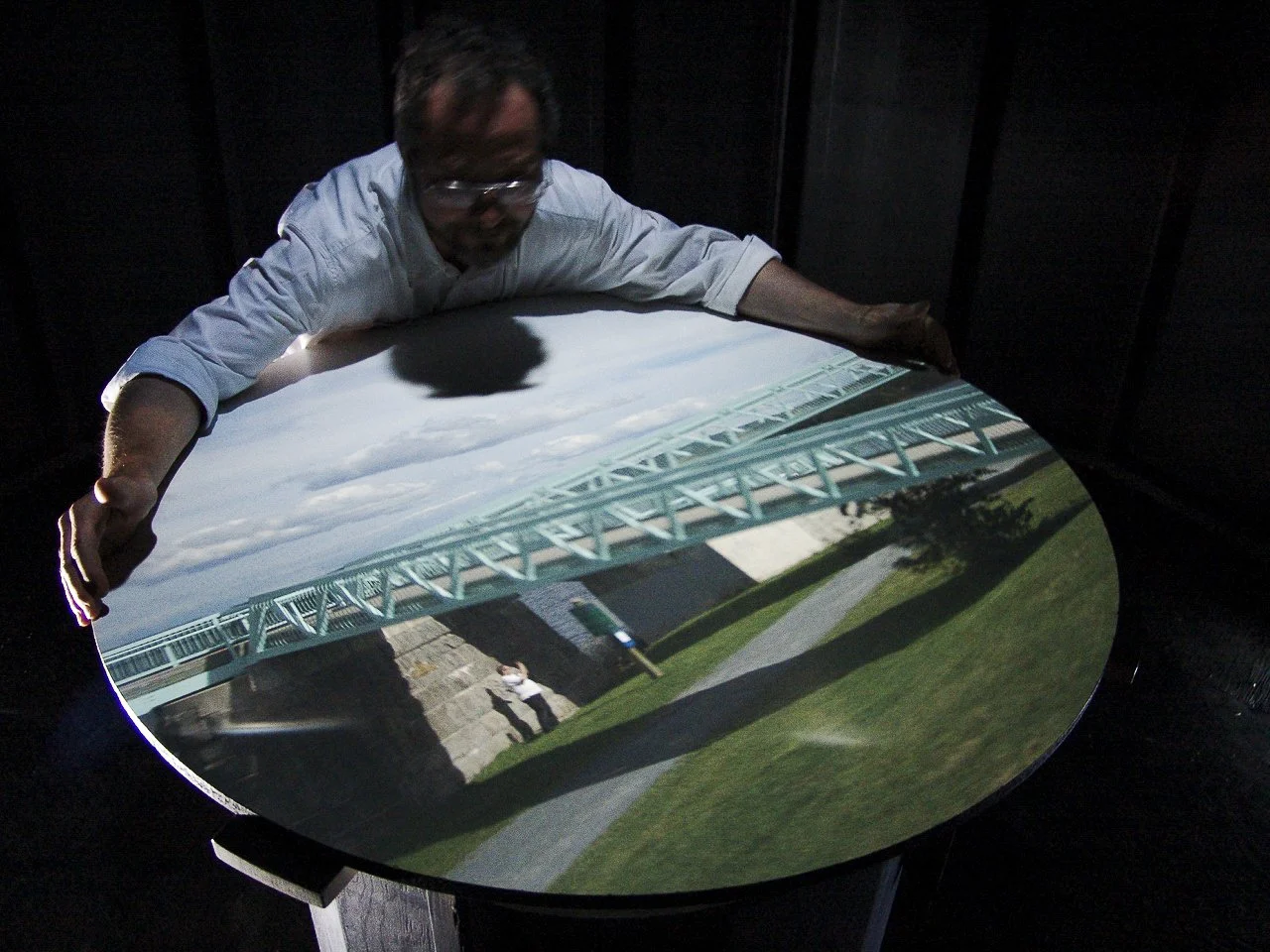
“Standing inside the space of the camera chamber, the viewer becomes an ‘interiorized observer to an exterior world’…The ebb and flow of river and humanity are revealed in real-time views…”
Description excerpt from the Wolastoq (Beautiful River) The St. John River Project exhibition catalogue, published, 2012
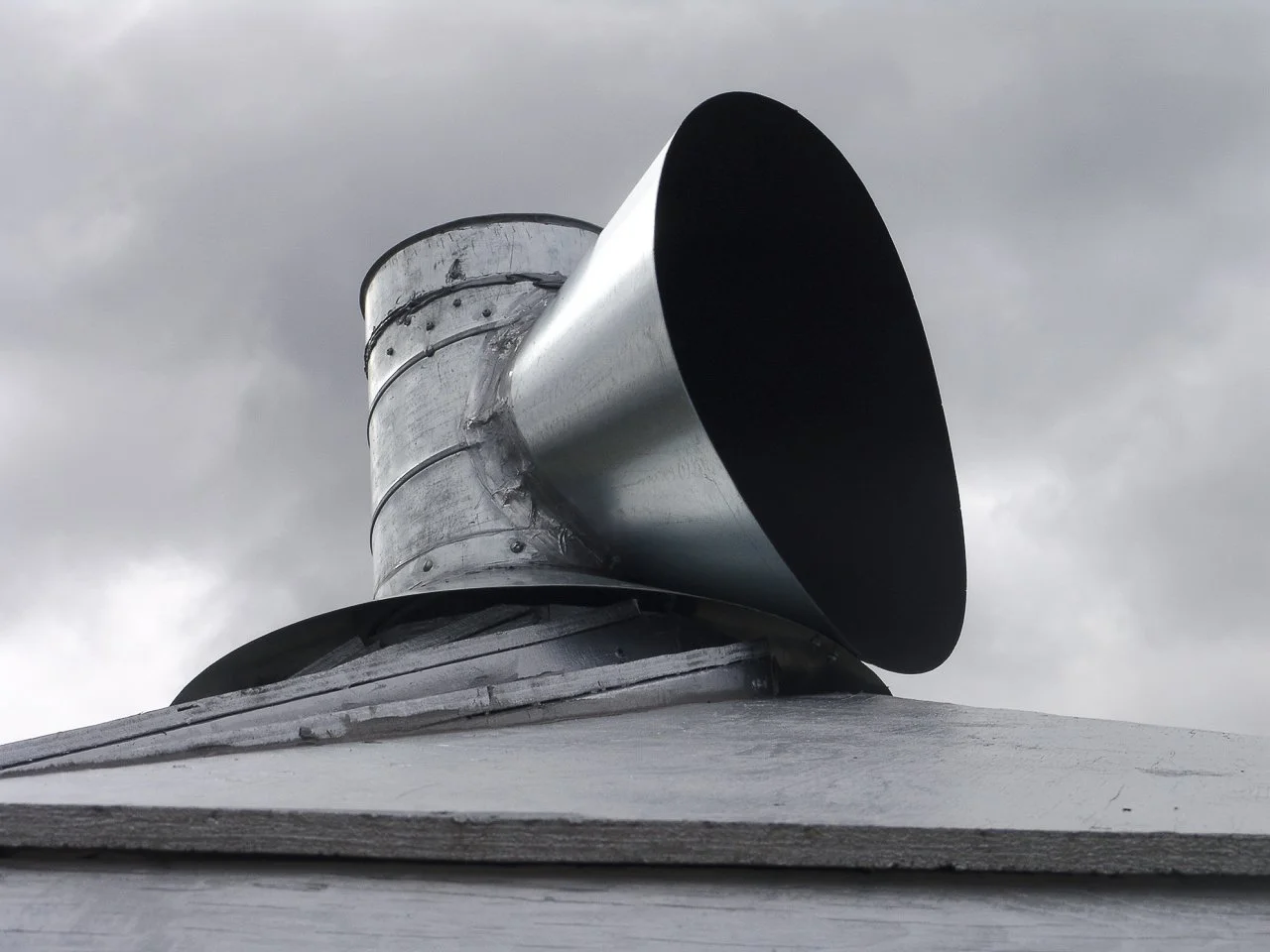
Vorti-Scope, lens housing, 2010
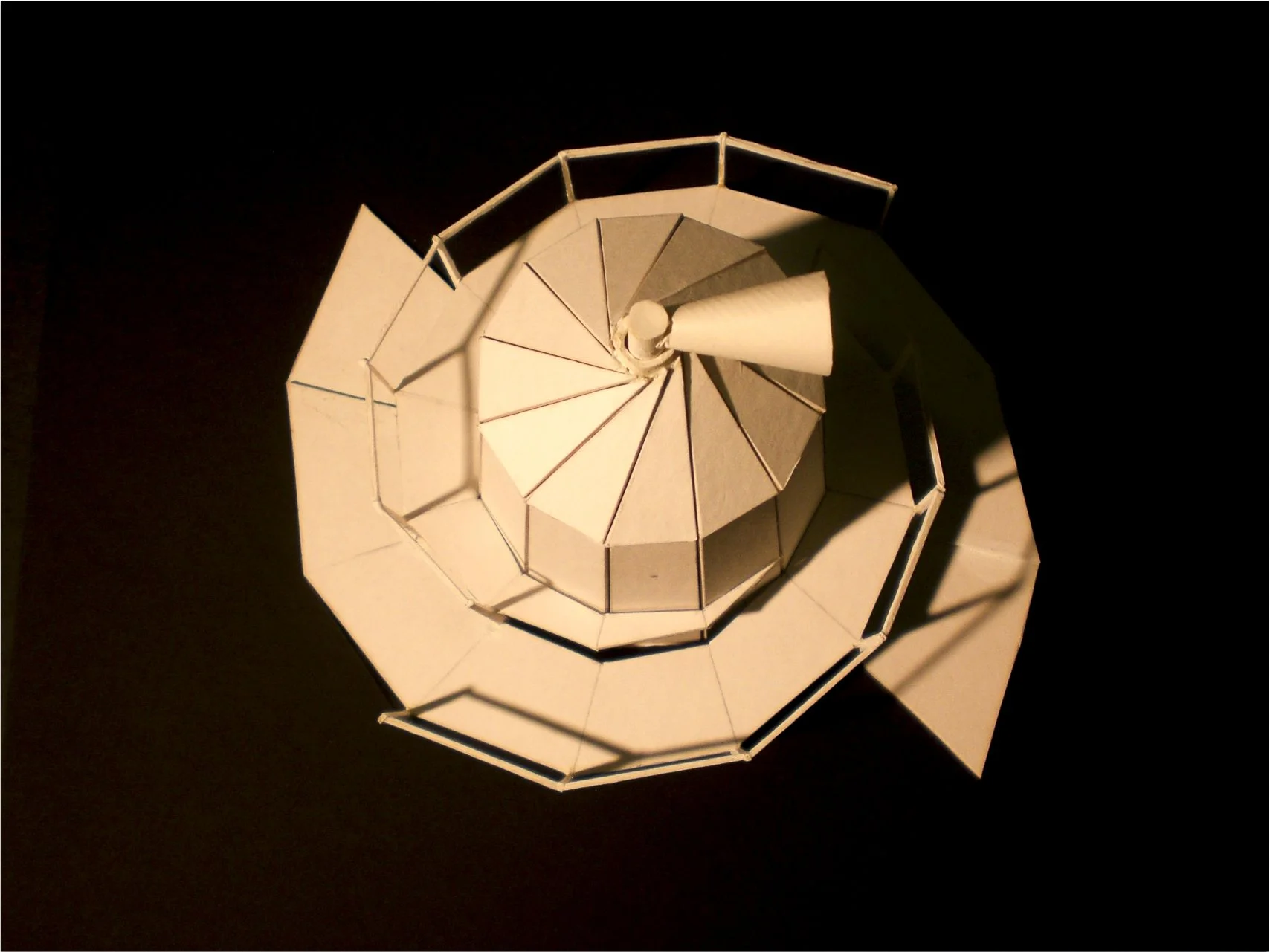
Vorti-Scope, maquette, 2010
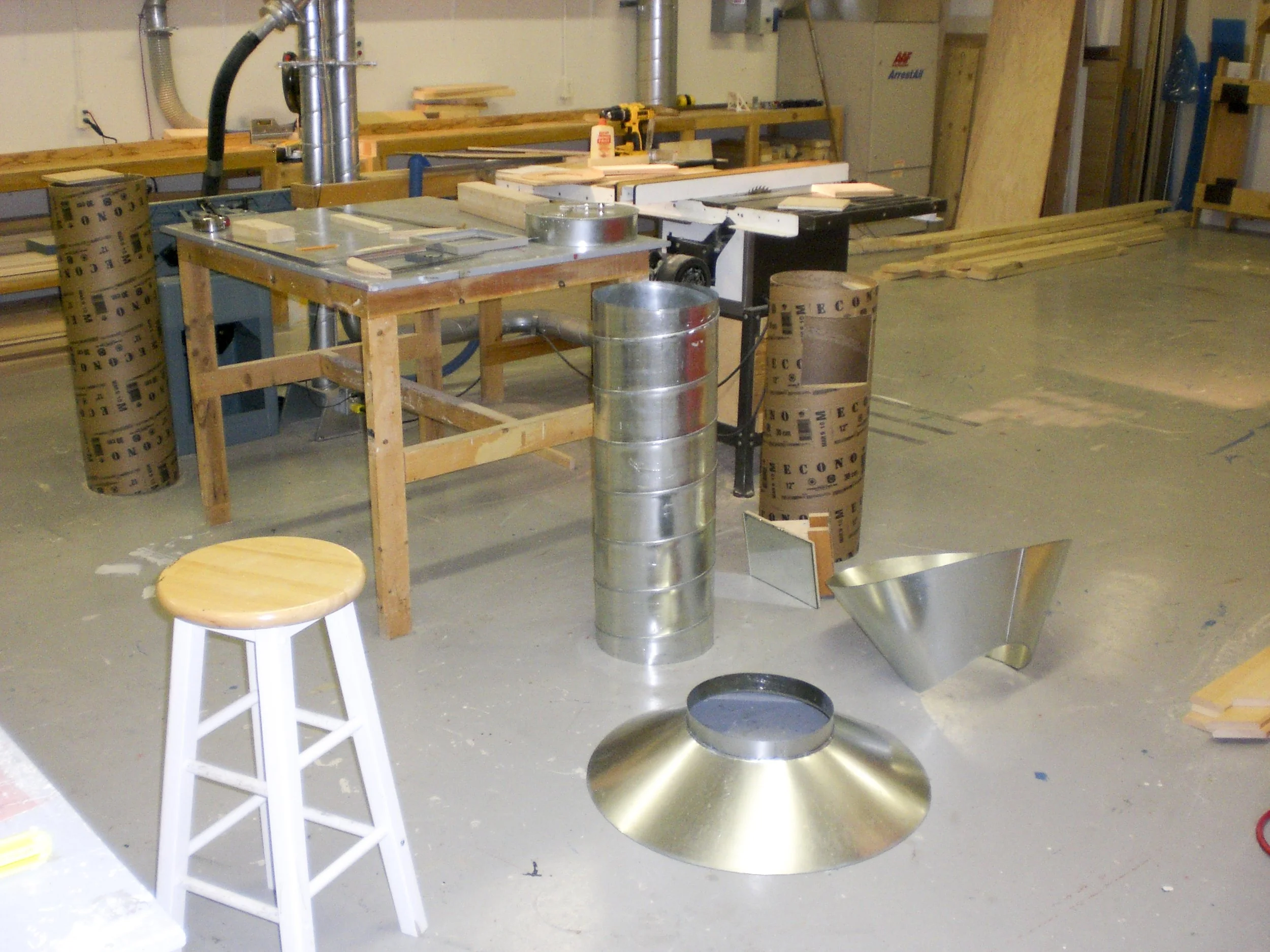
Lens and mirror housing components, 2010
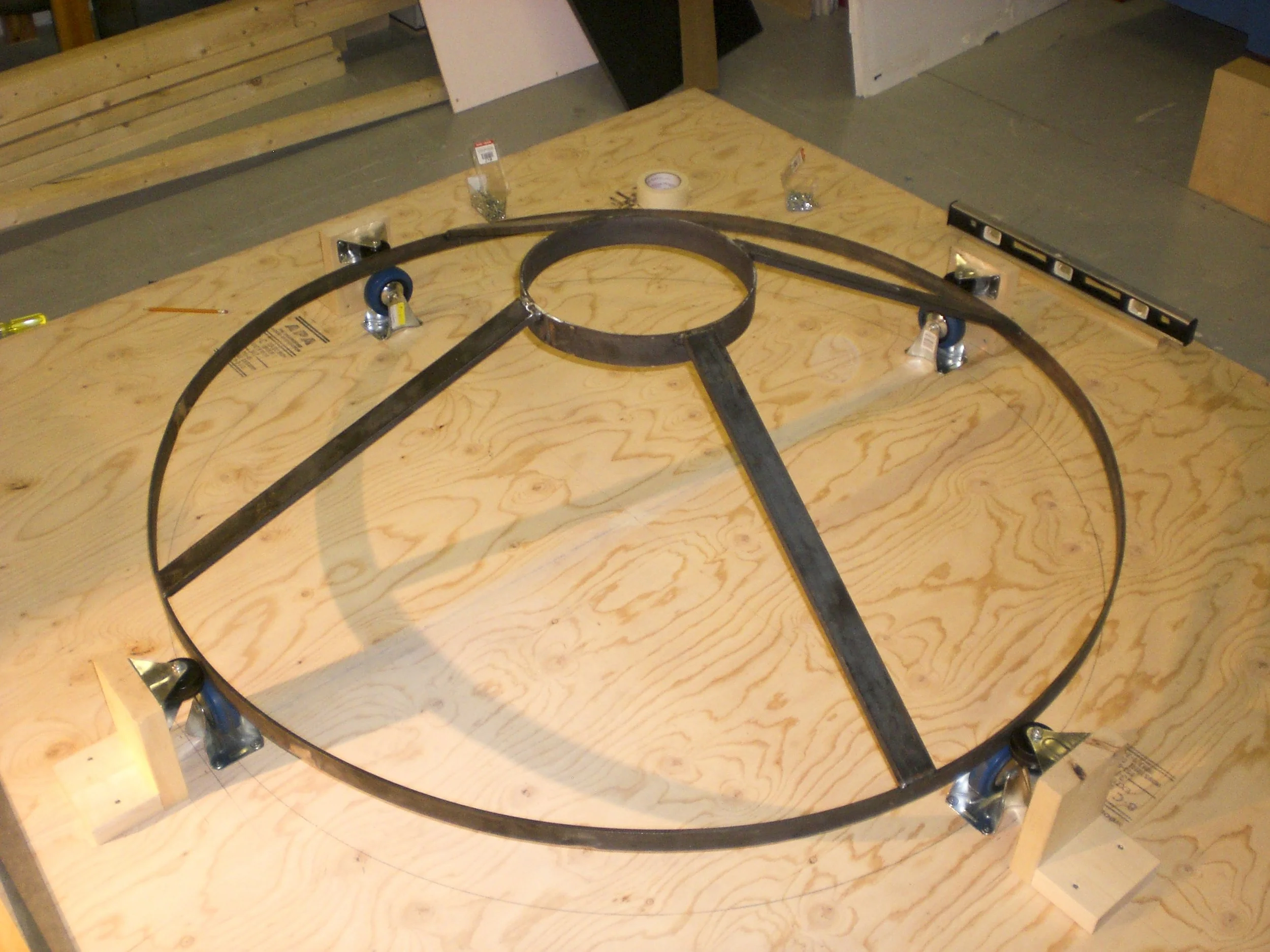
Lens rotation mechanism, 2010
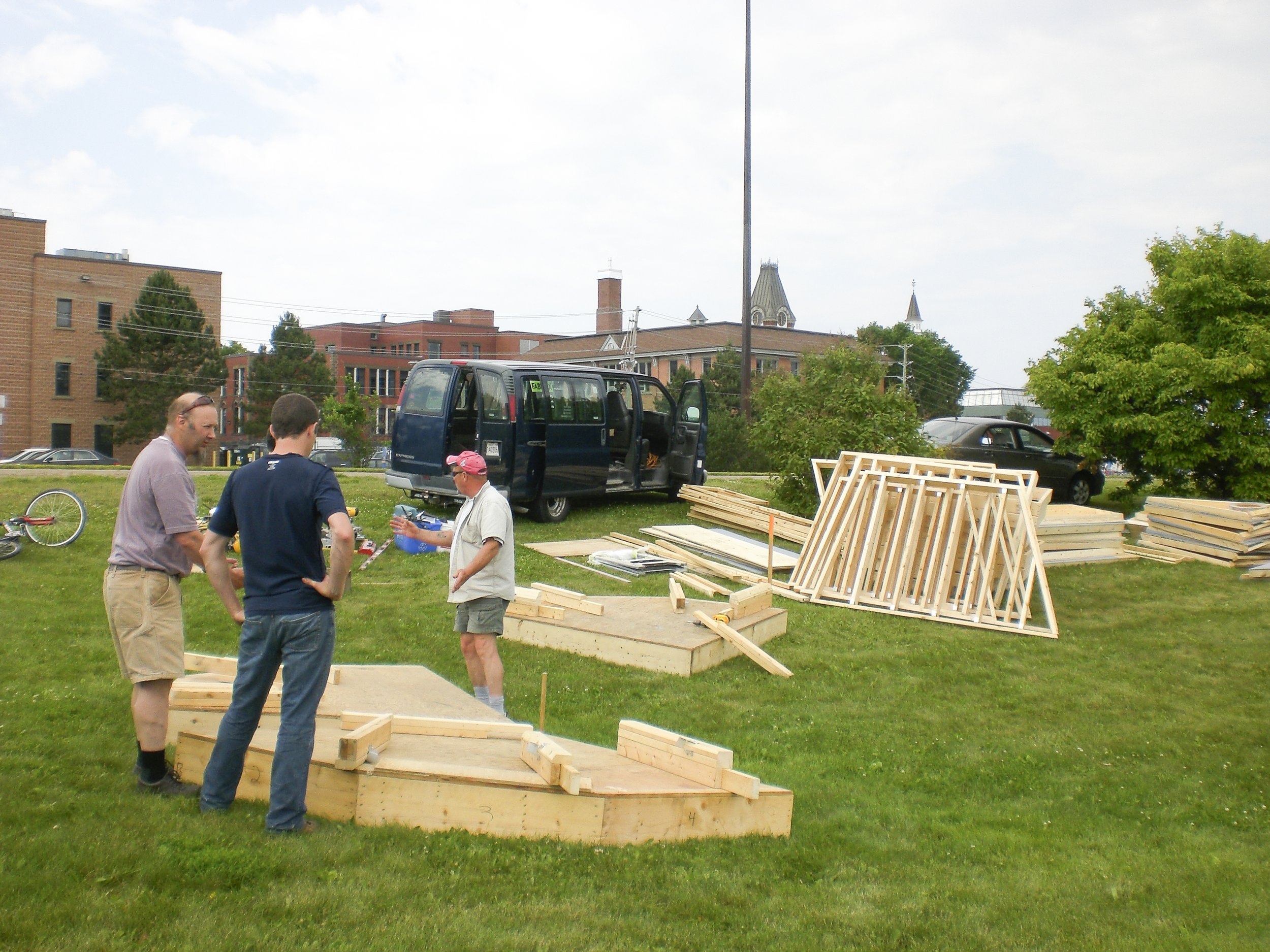
Walls, roof and ramp components, 2010
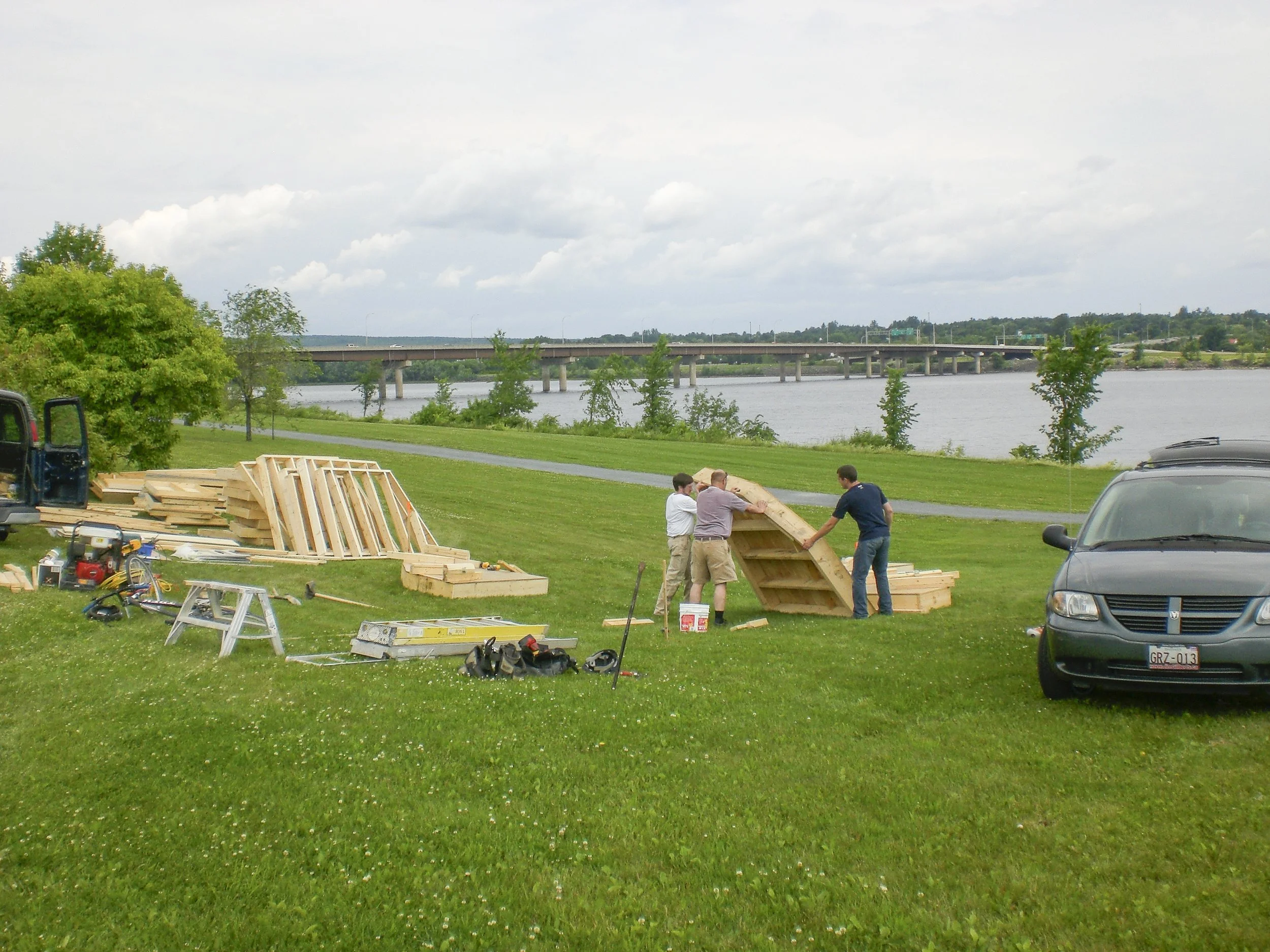
Floor components, 2010
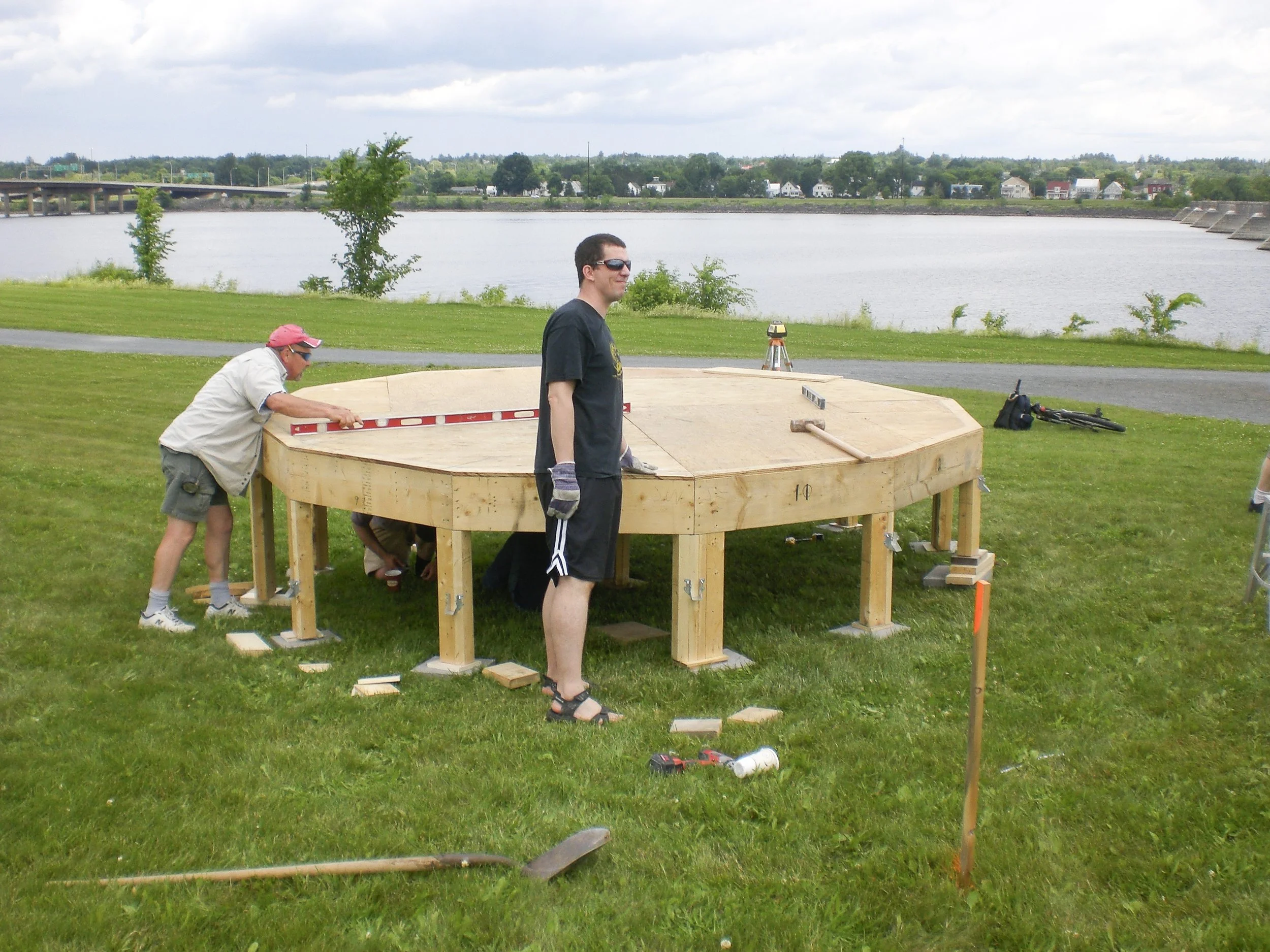
Floor installation, 2010
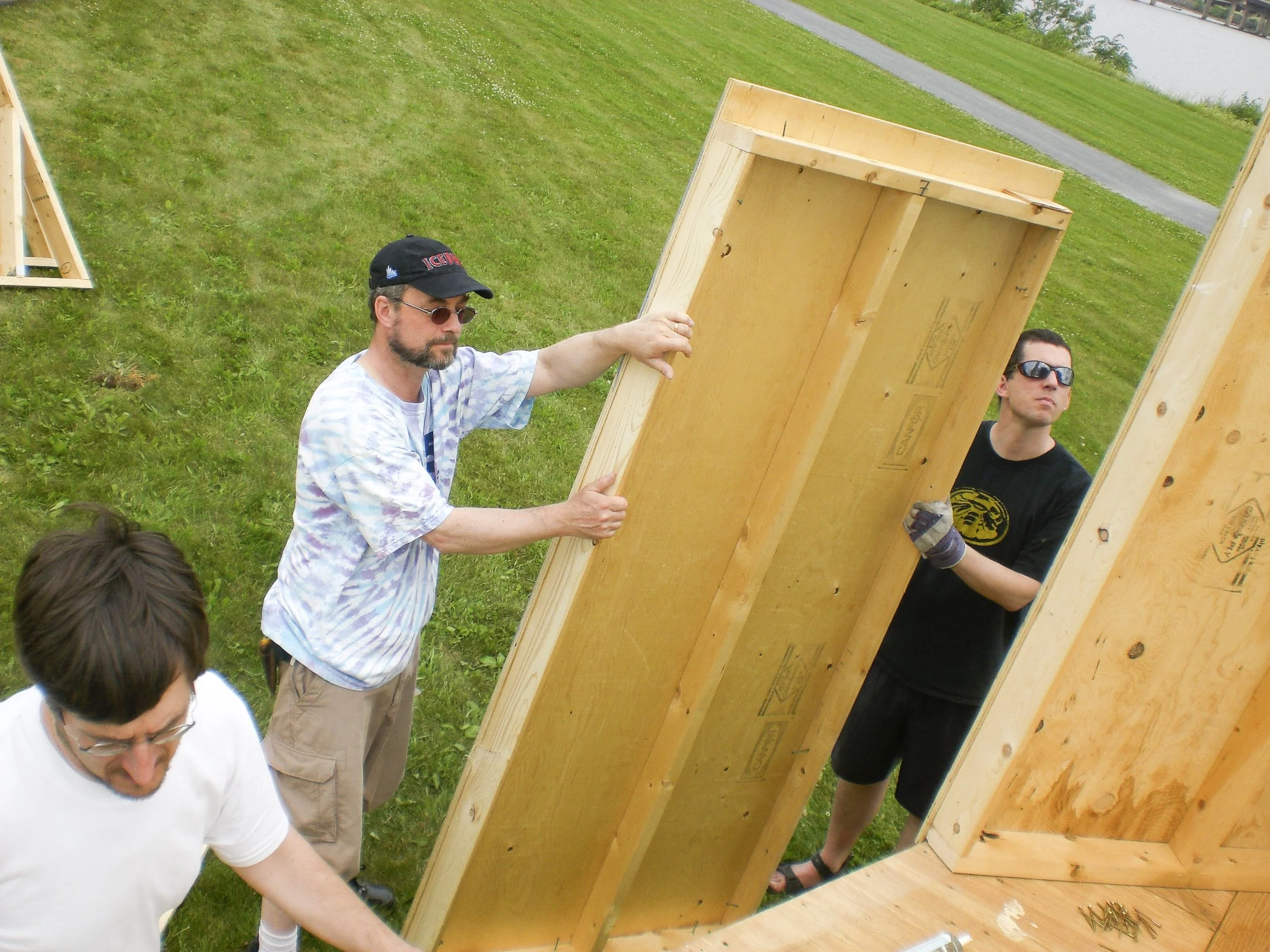
Wall installation, 2010

Roof installation, 2010
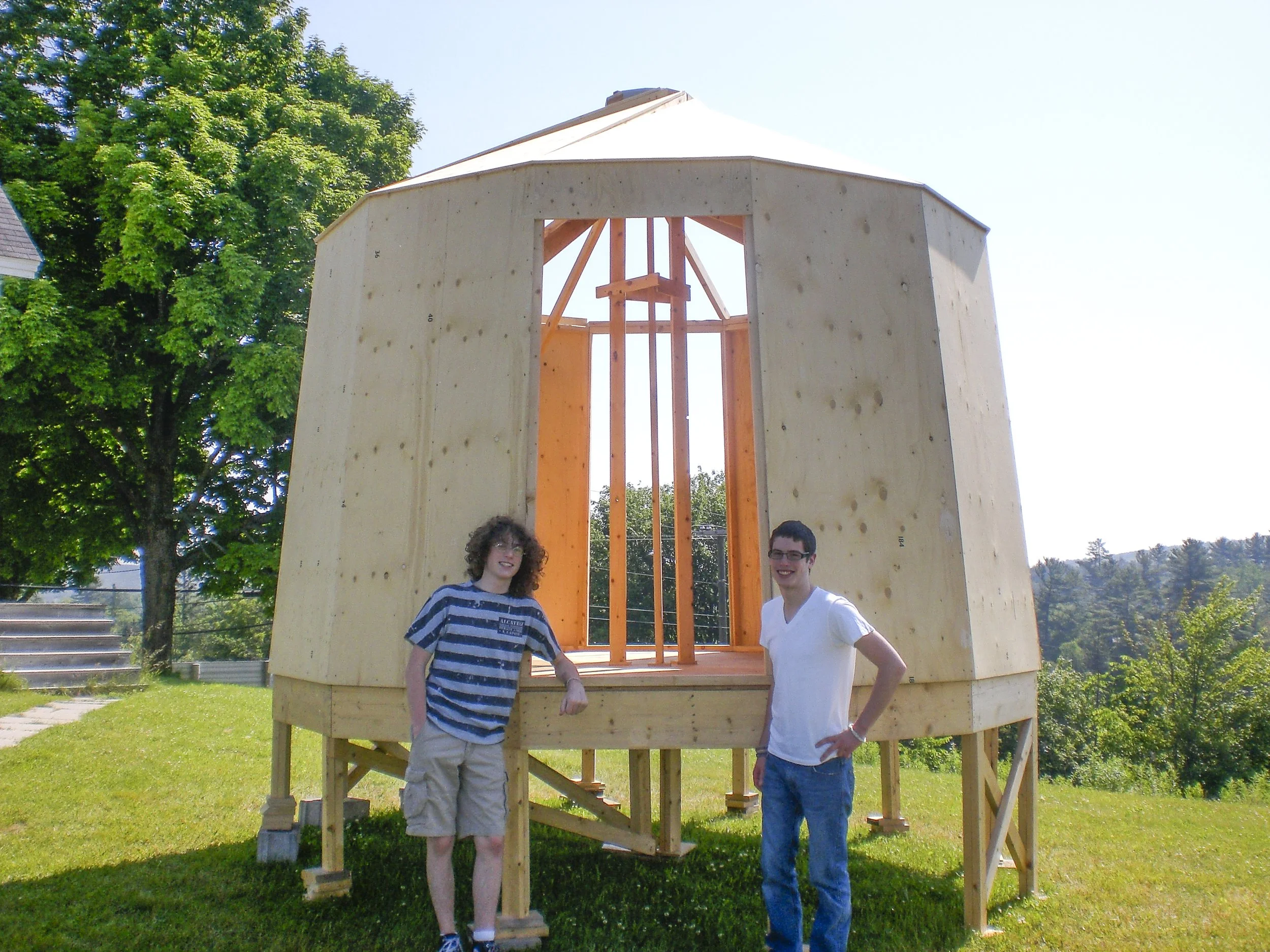
Floor, walls and roof, completed, 2010
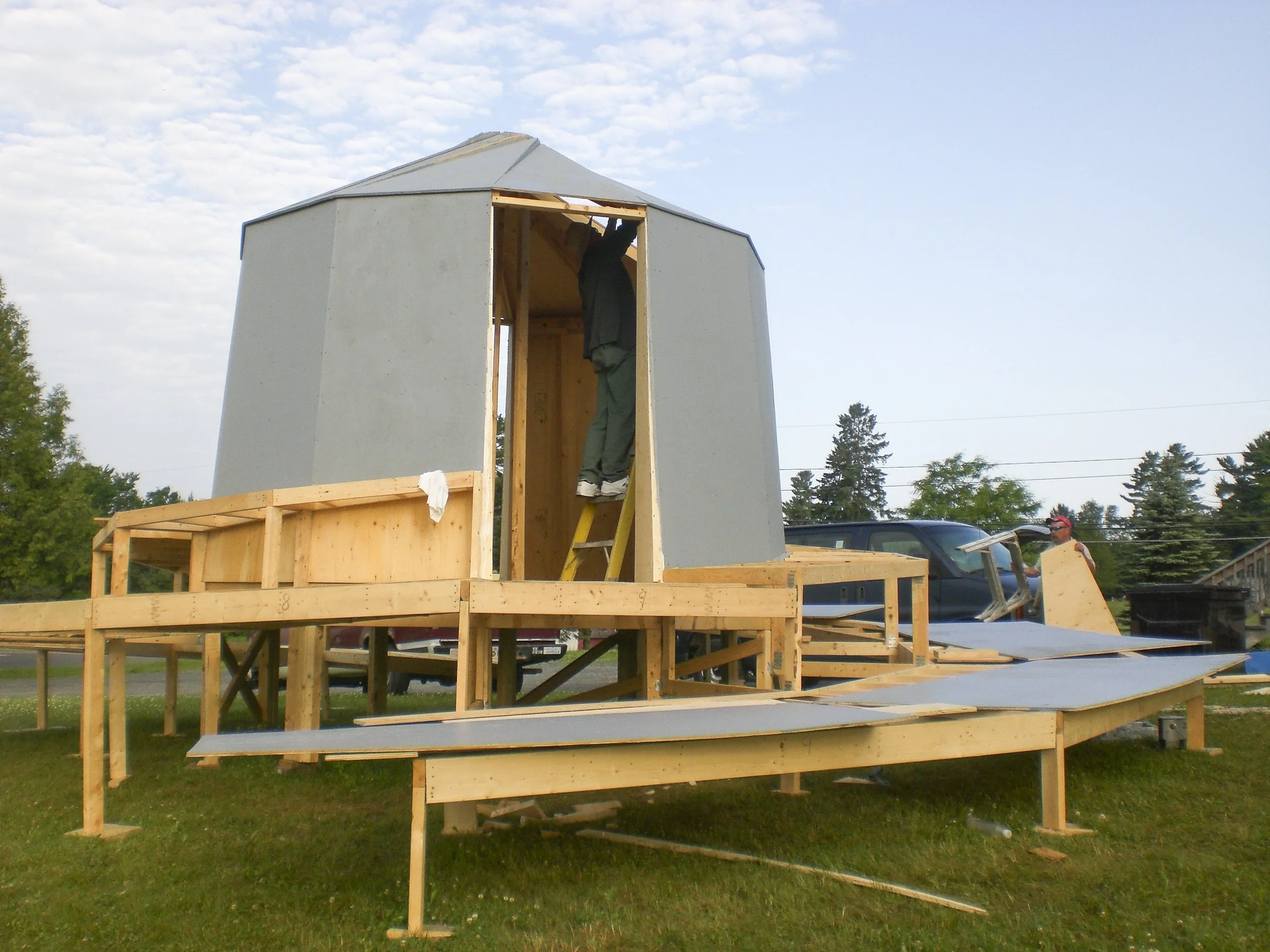
Camera and ramps installation, 2010
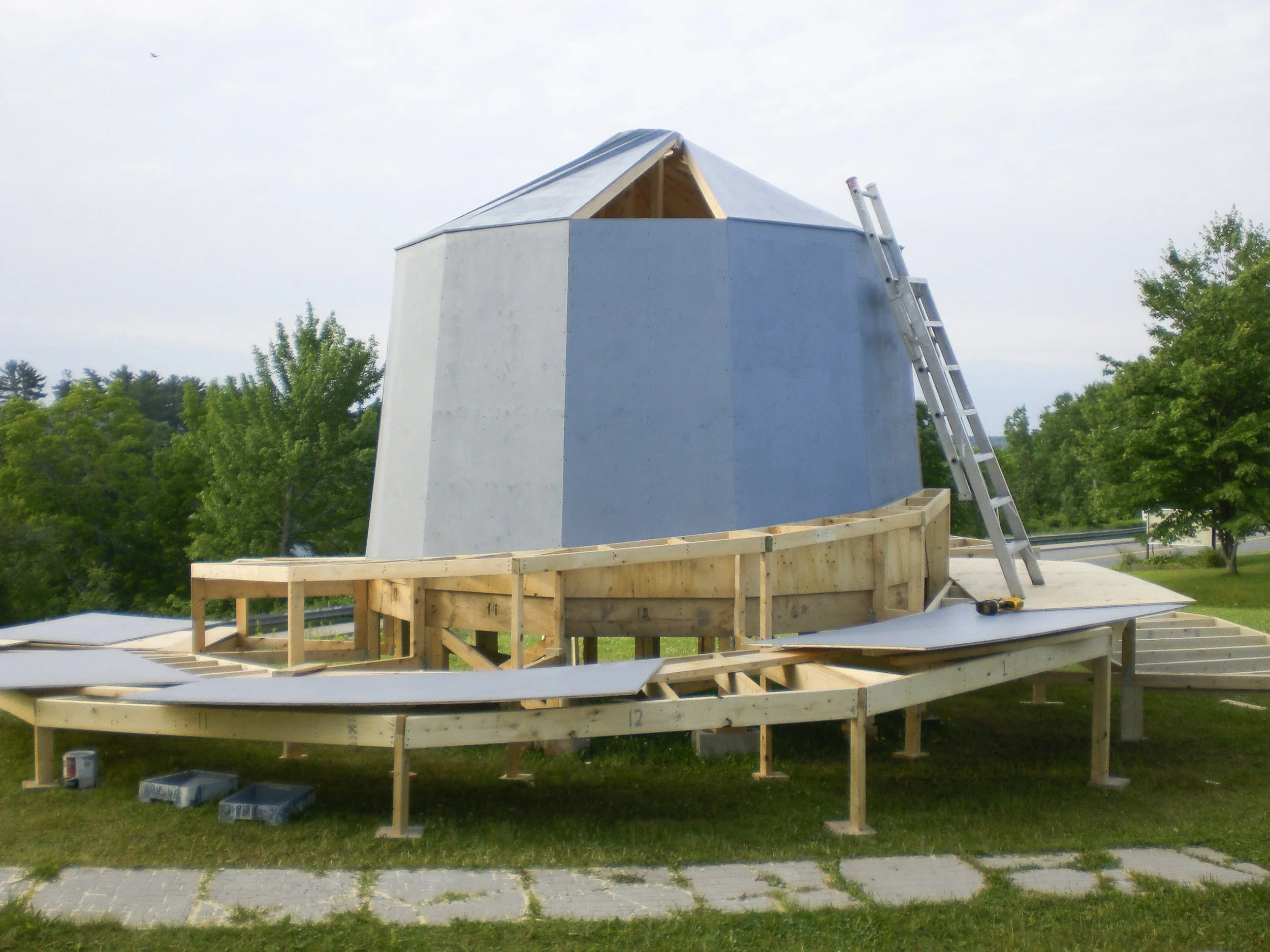
Camera and ramps installation, 2010
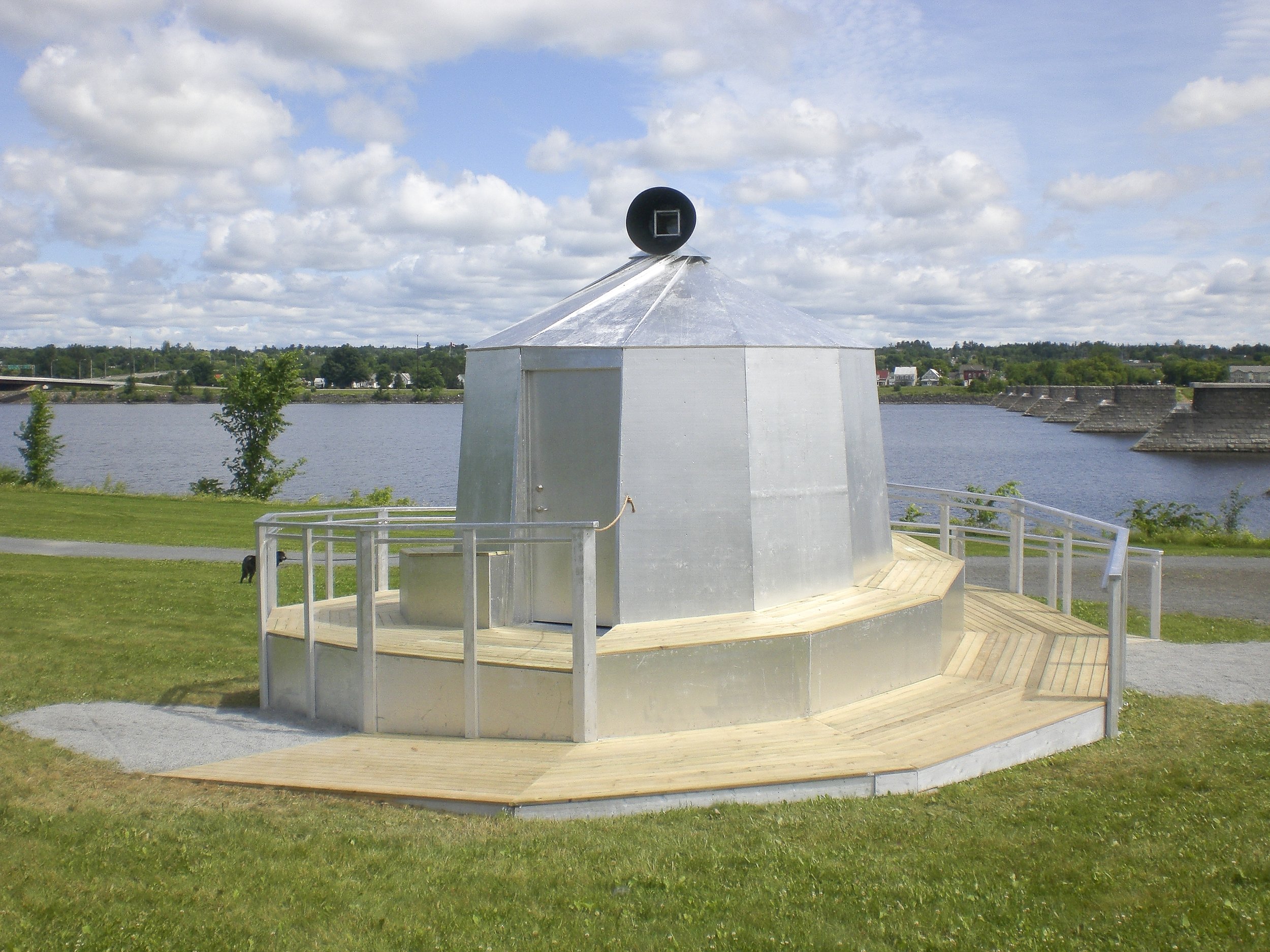
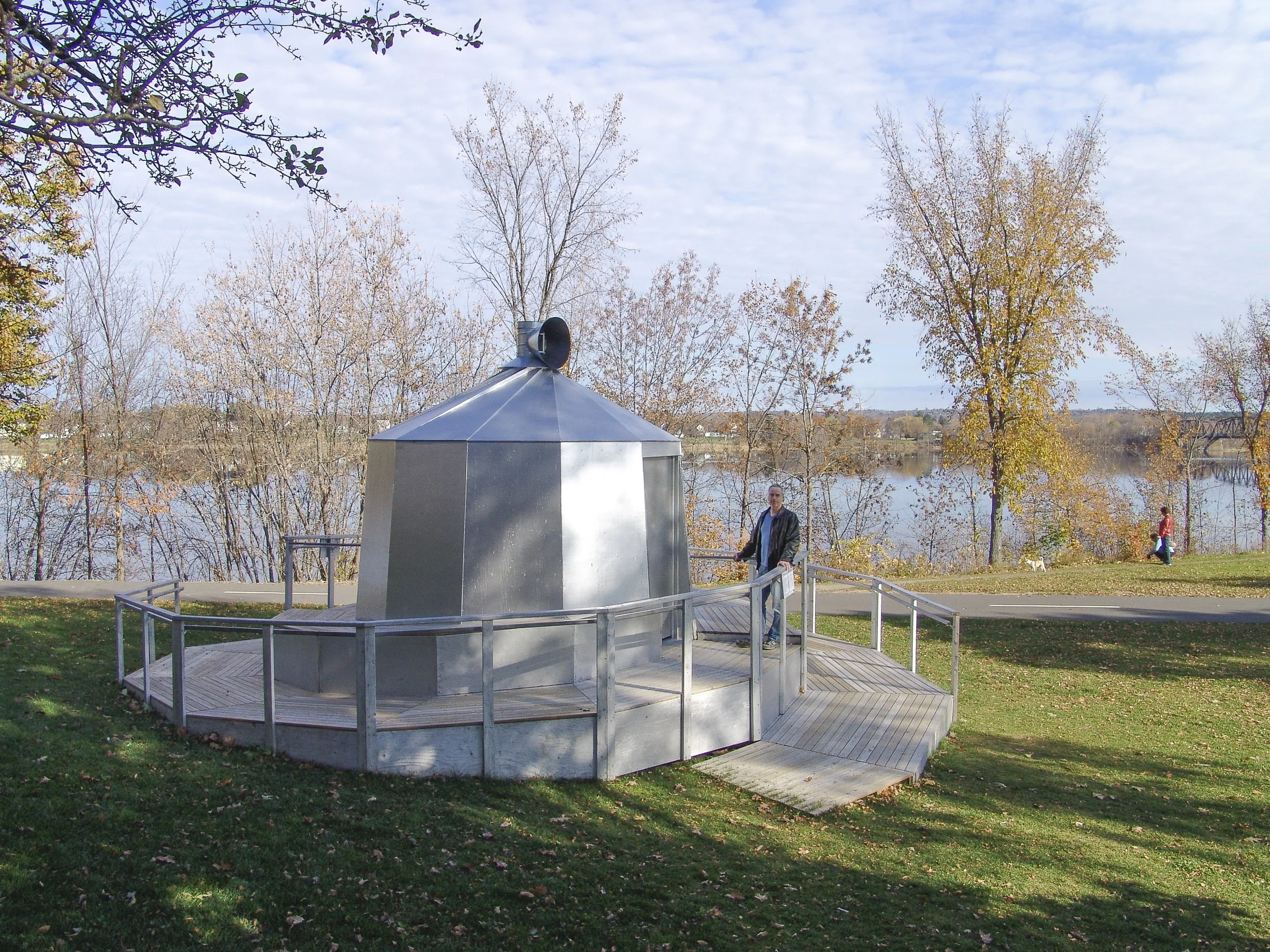
Vorti-Scope, Wolastoq/St. John River location, Fredericton, 2010
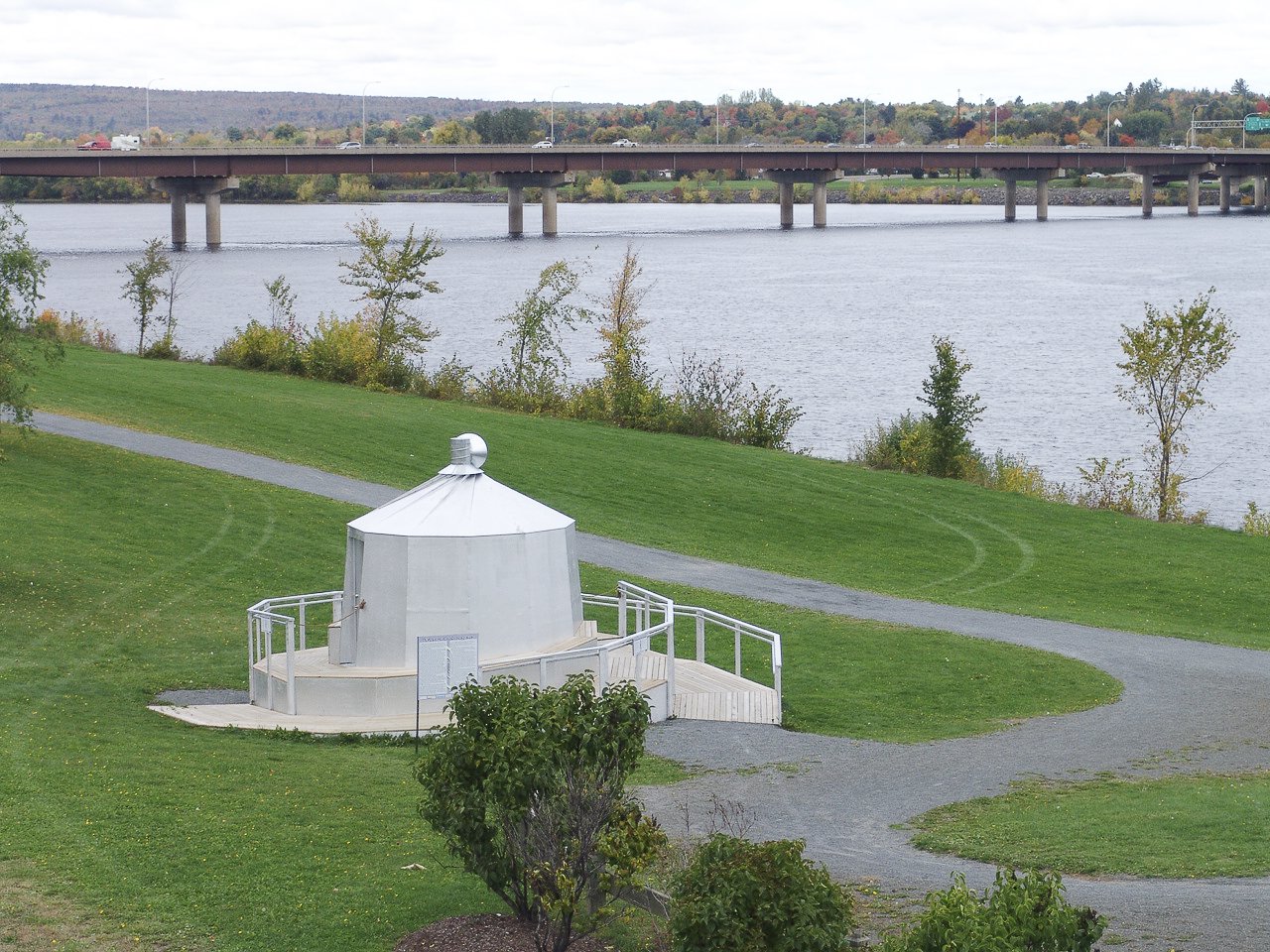
Vorti-Scope, Wolastoq/St. John River location, Fredericton, 2010
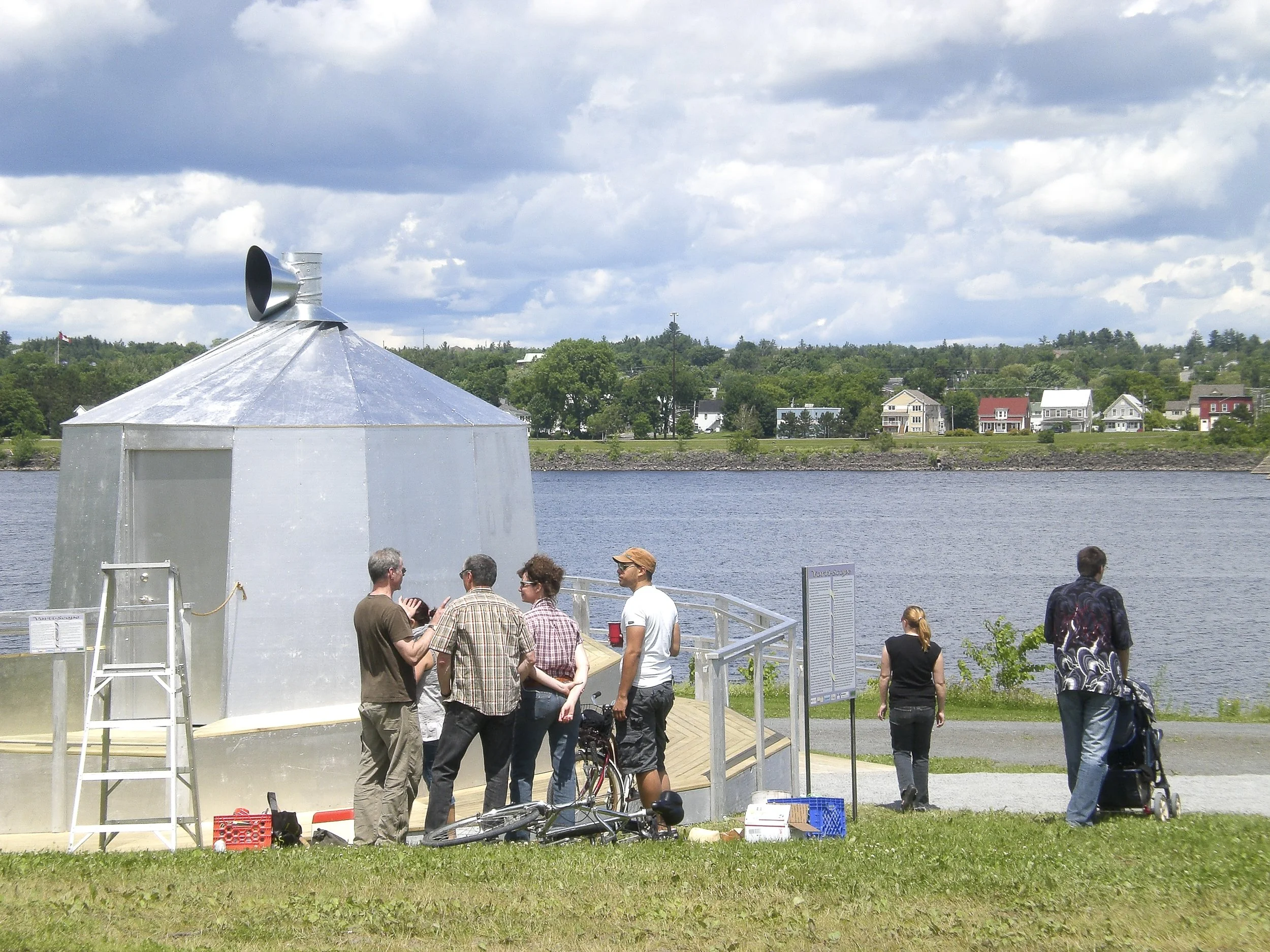
Vorti-Scope, Wolastoq/St. John River location, Fredericton, 2010
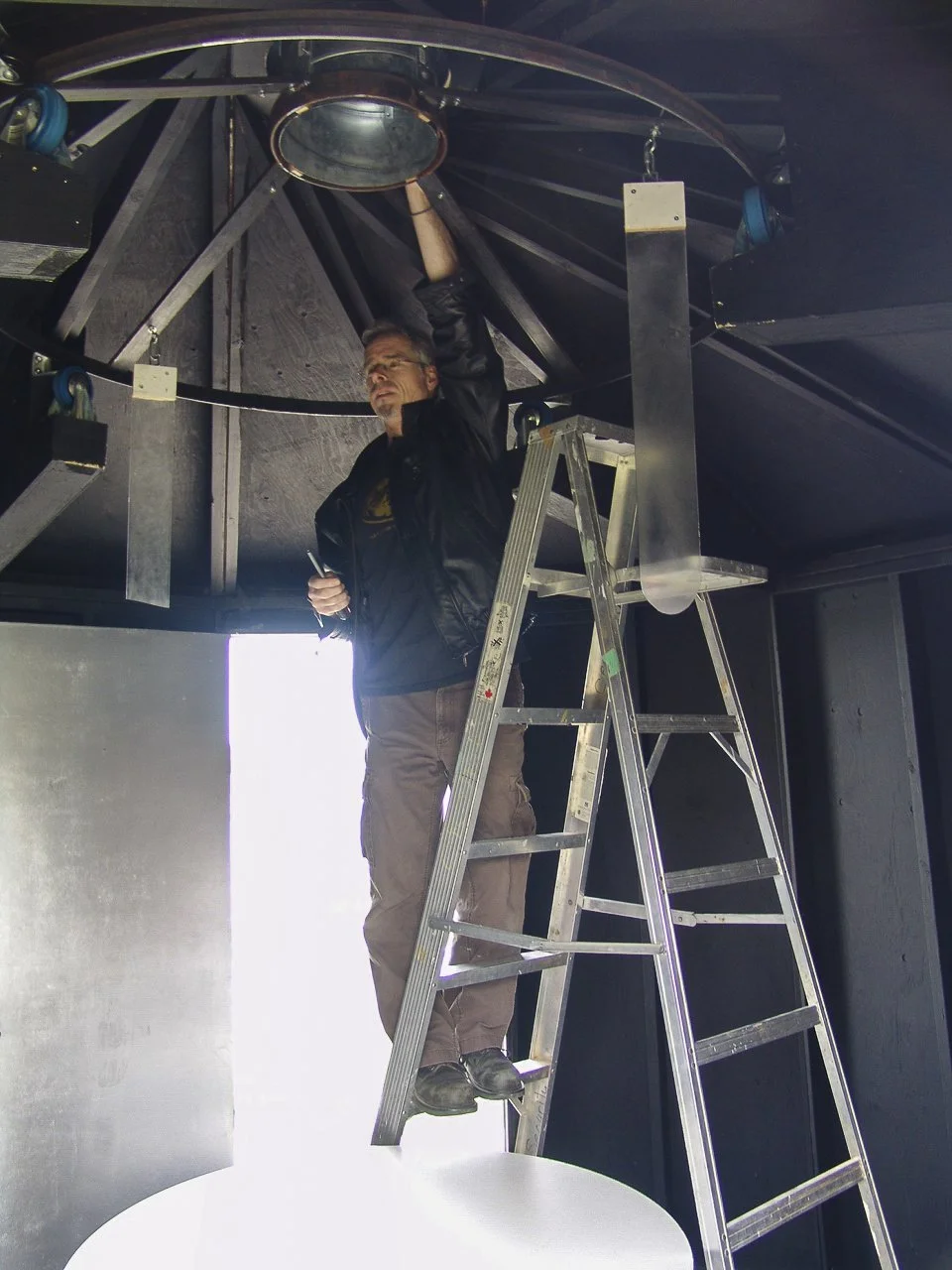
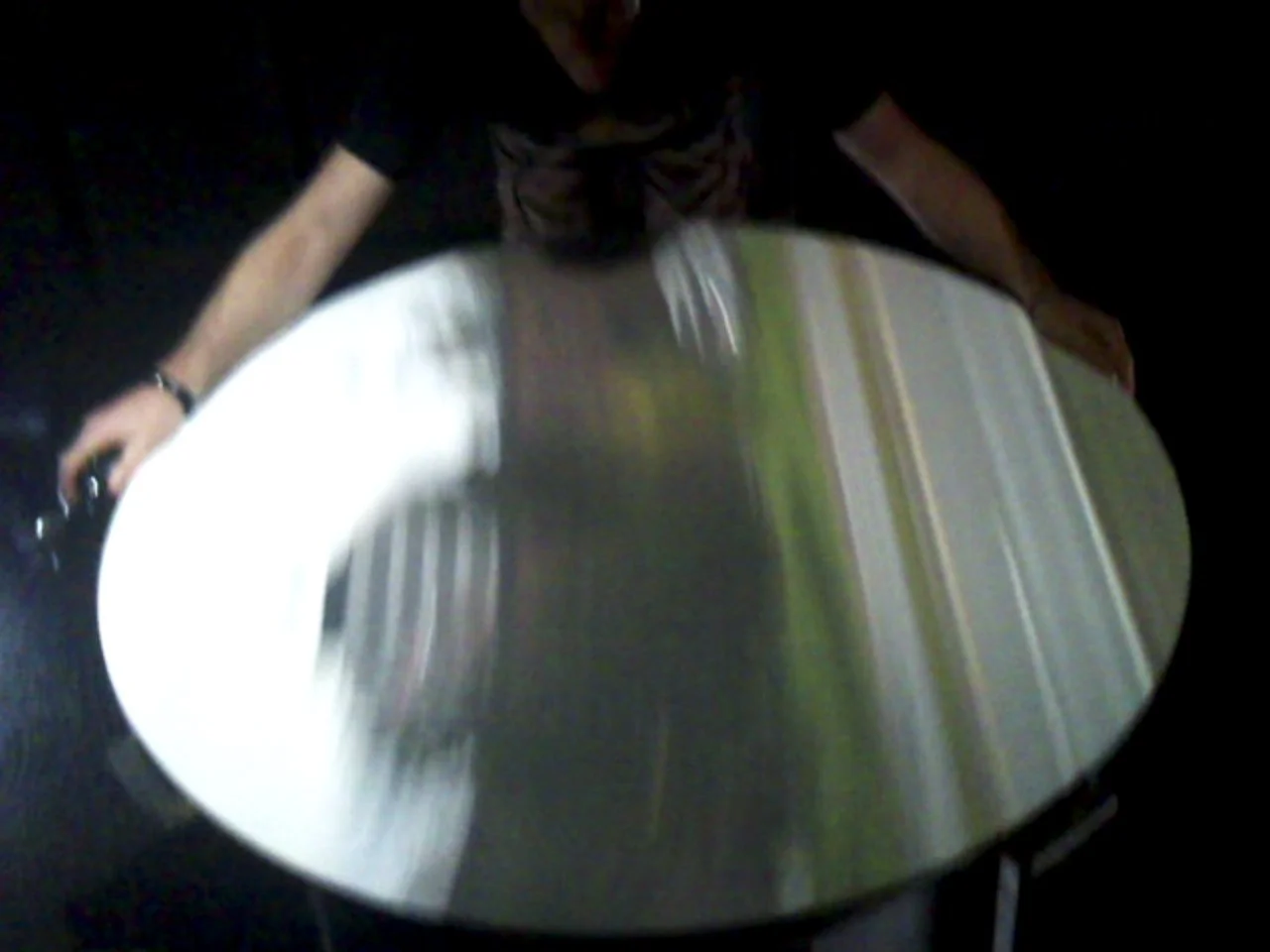
Vorti-Scope, interior with lens housing and viewing table, 2010
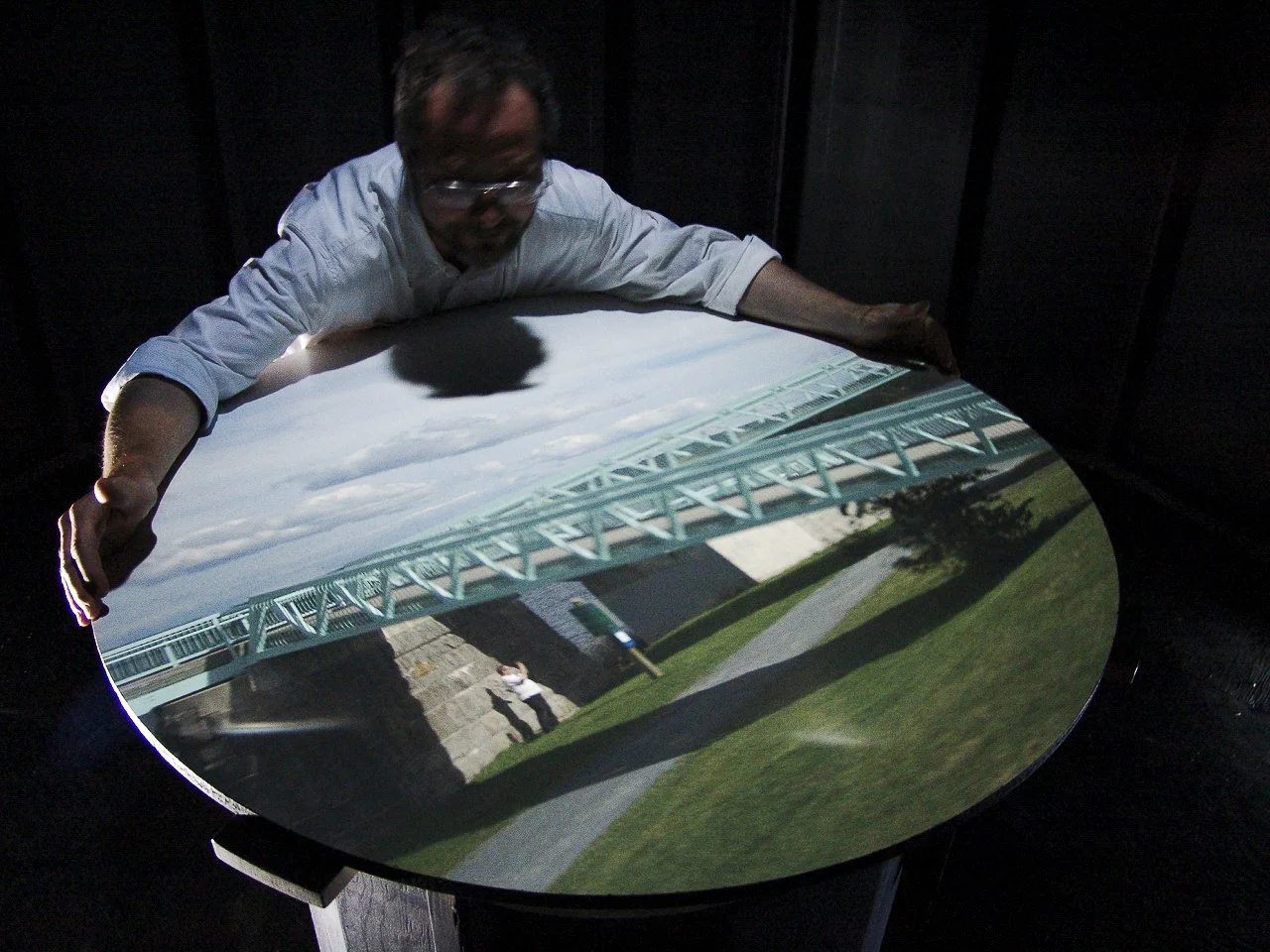
Viewing table, Wolastoq/St. John River location, Fredericton, 2010
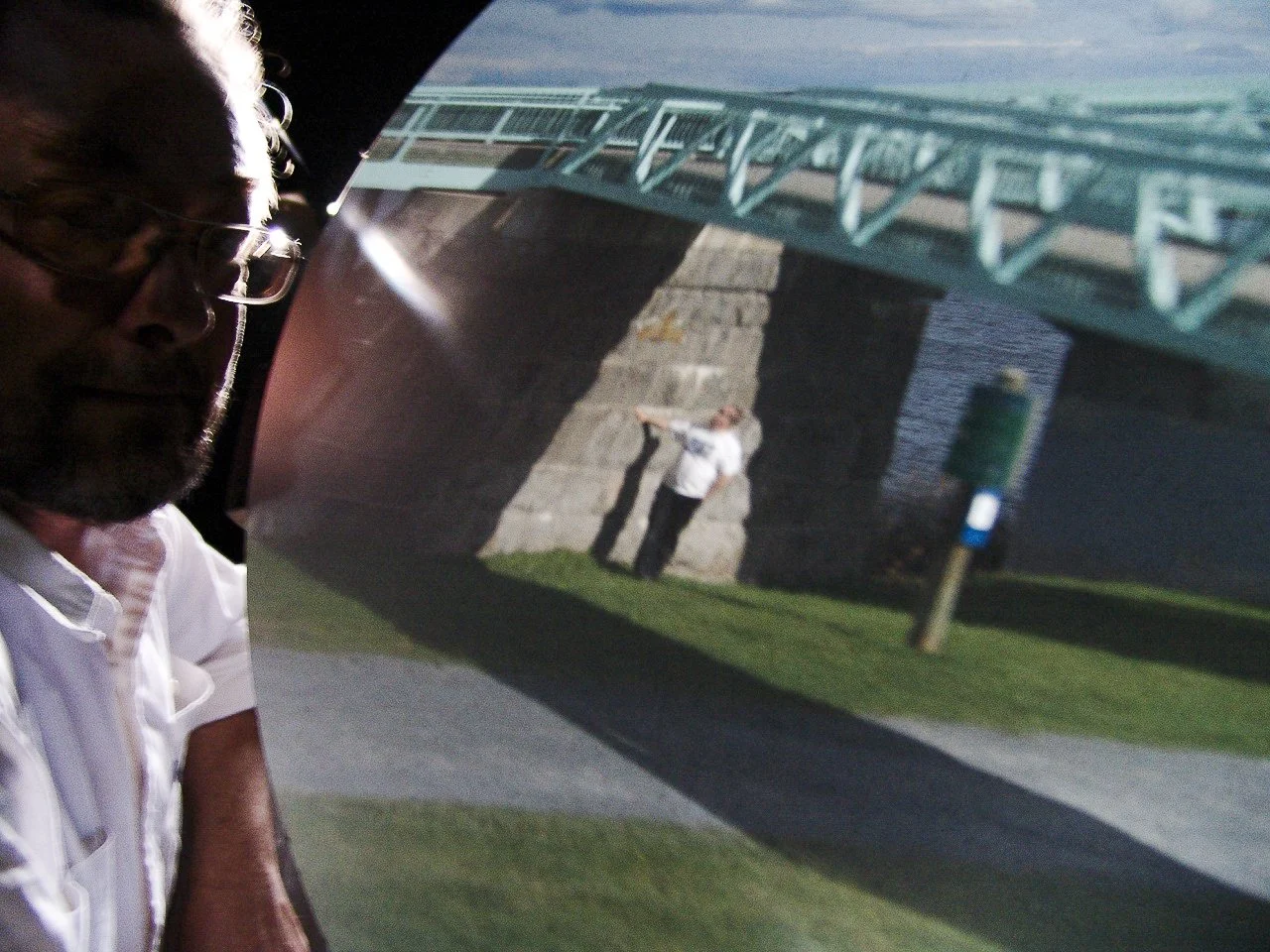
Viewing table, Wolastoq/St. John River location, Fredericton, 2010
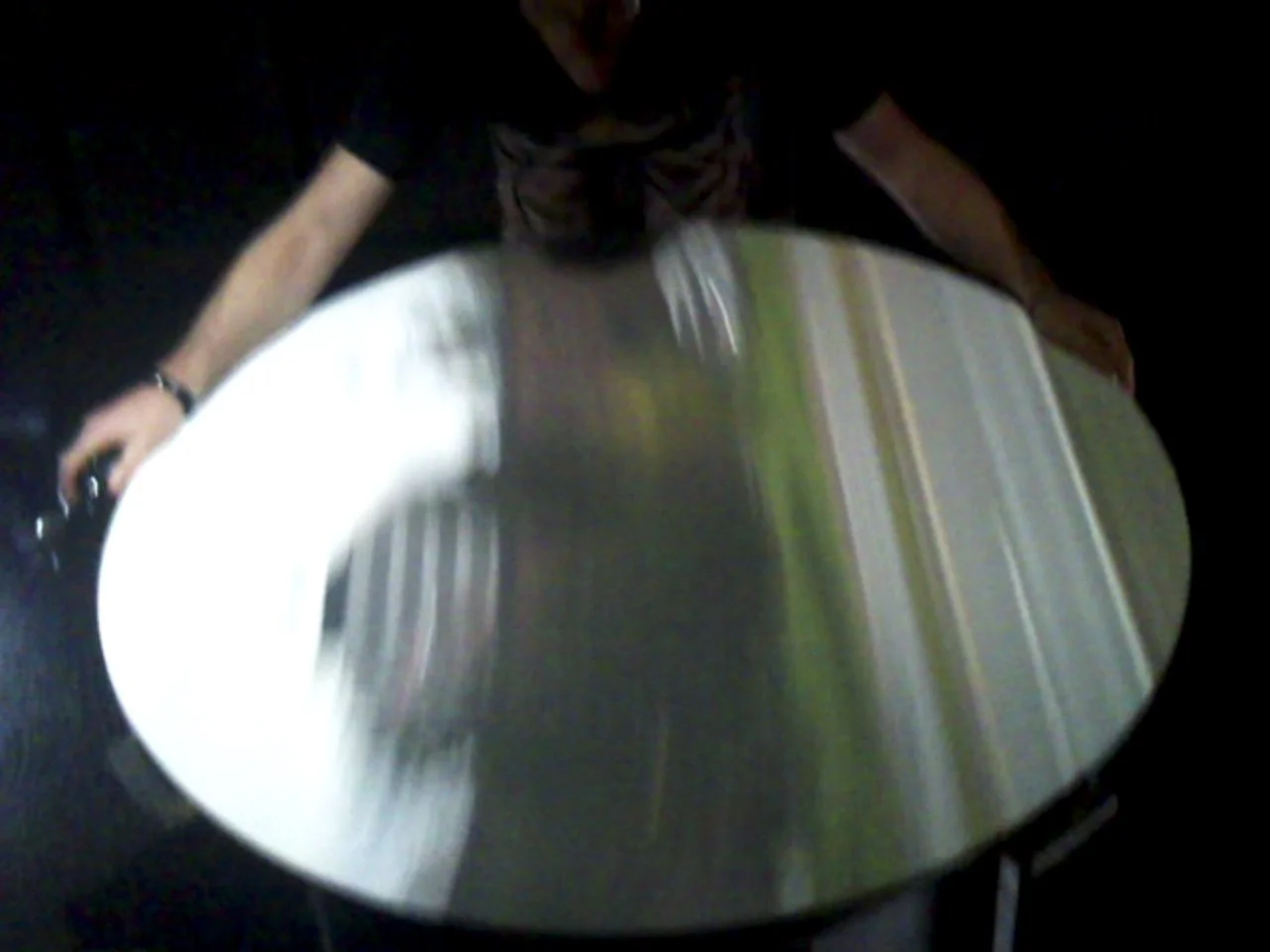
Viewing table, Wolastoq/St. John River location, Fredericton, 2010
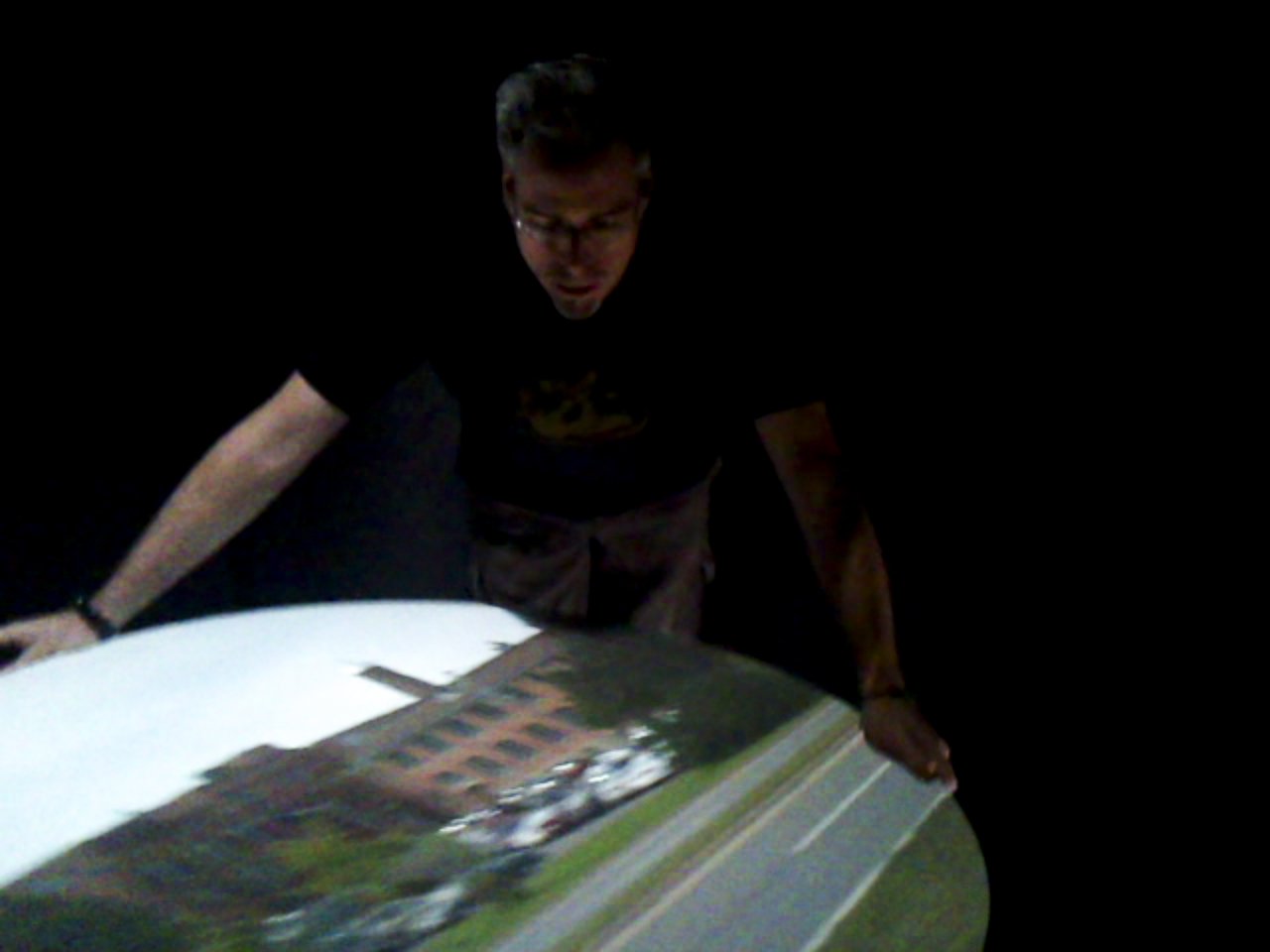
Viewing table, Wolastoq/St. John River location, Fredericton, 2010
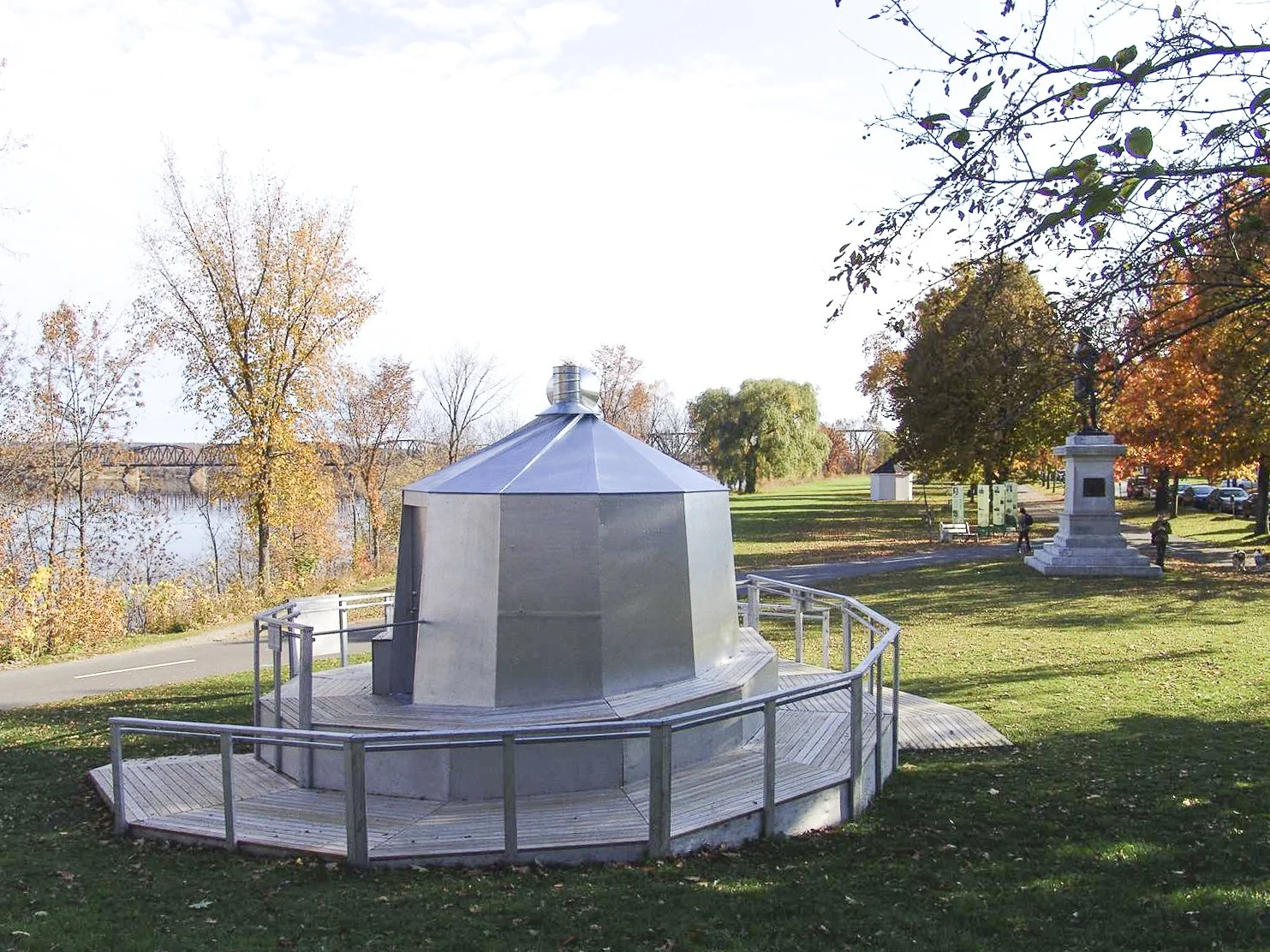
Vorti-Scope, Beaverbrook Art Gallery location, 2012
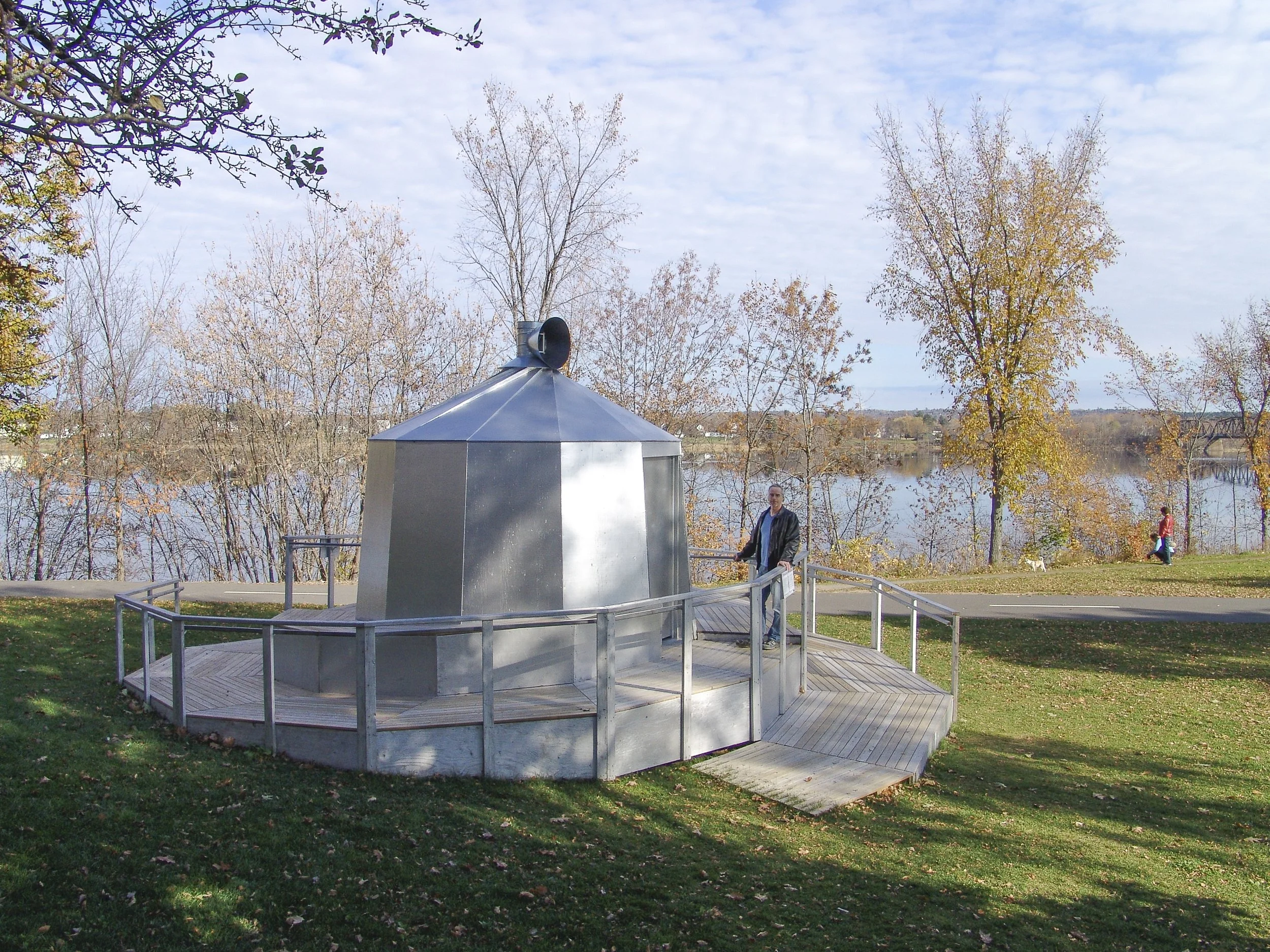
Vorti-Scope, Beaverbrook Art Gallery location, 2012
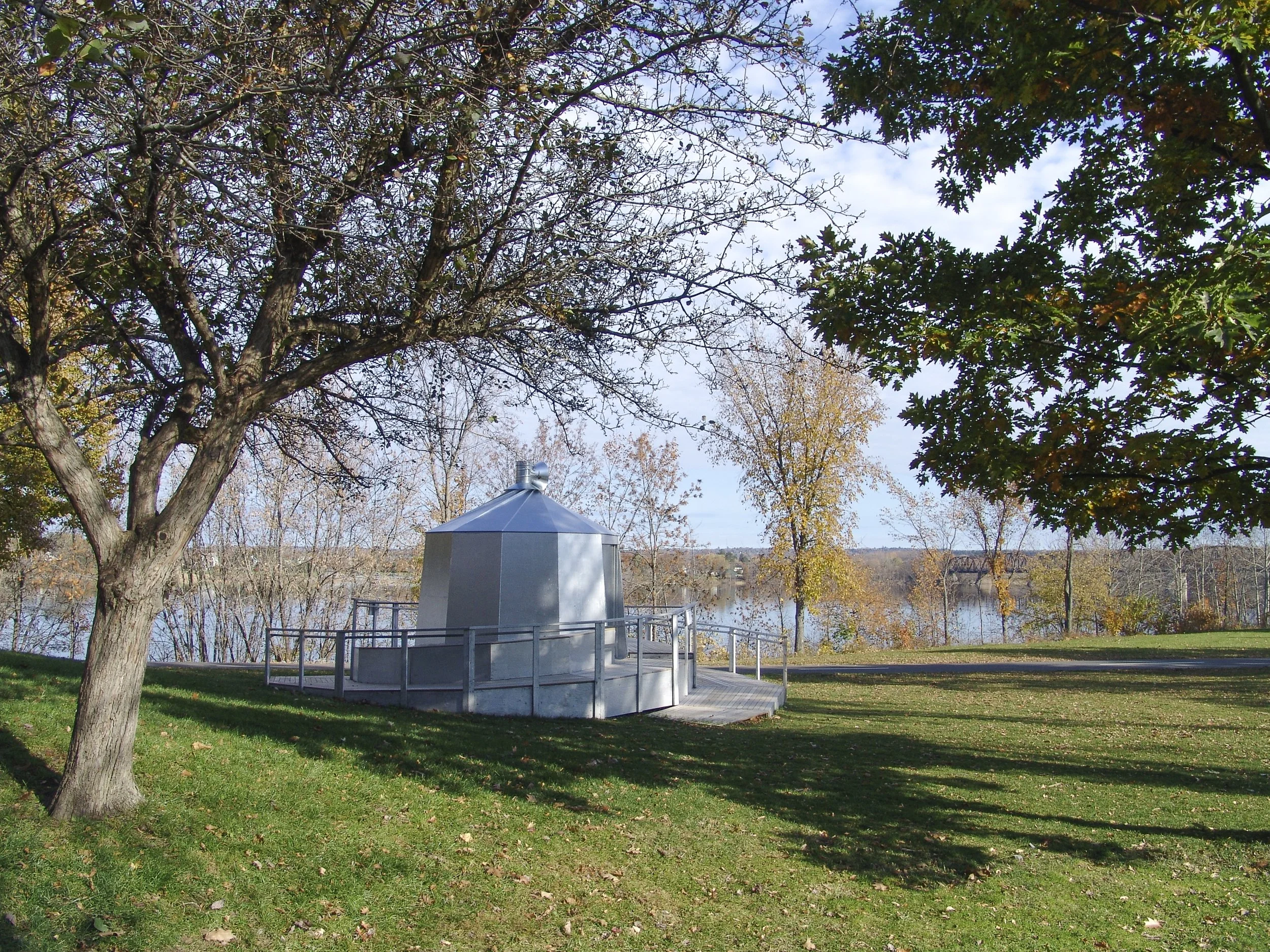
Vorti-Scope, Beaverbrook Art Gallery location, 2012
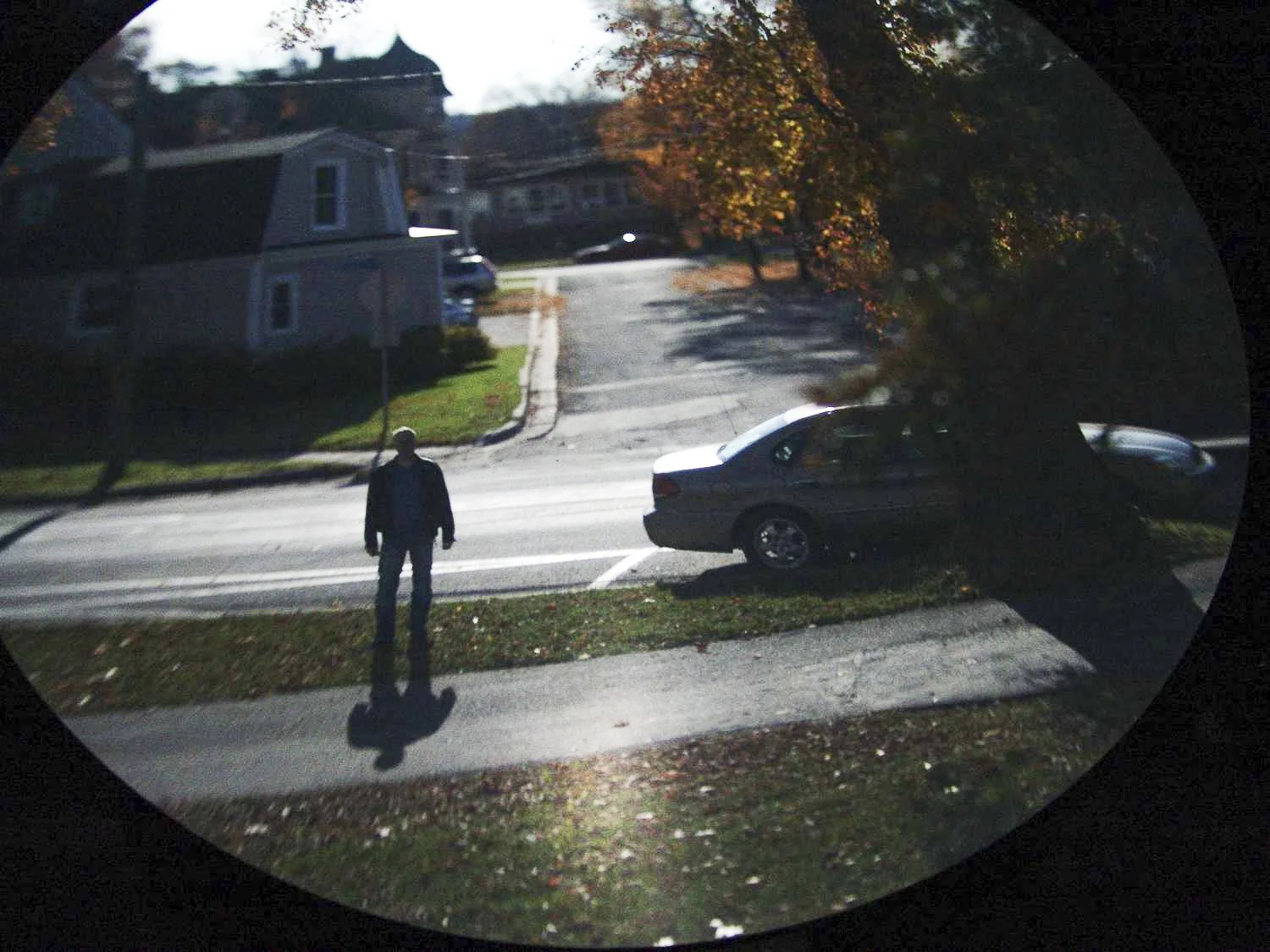
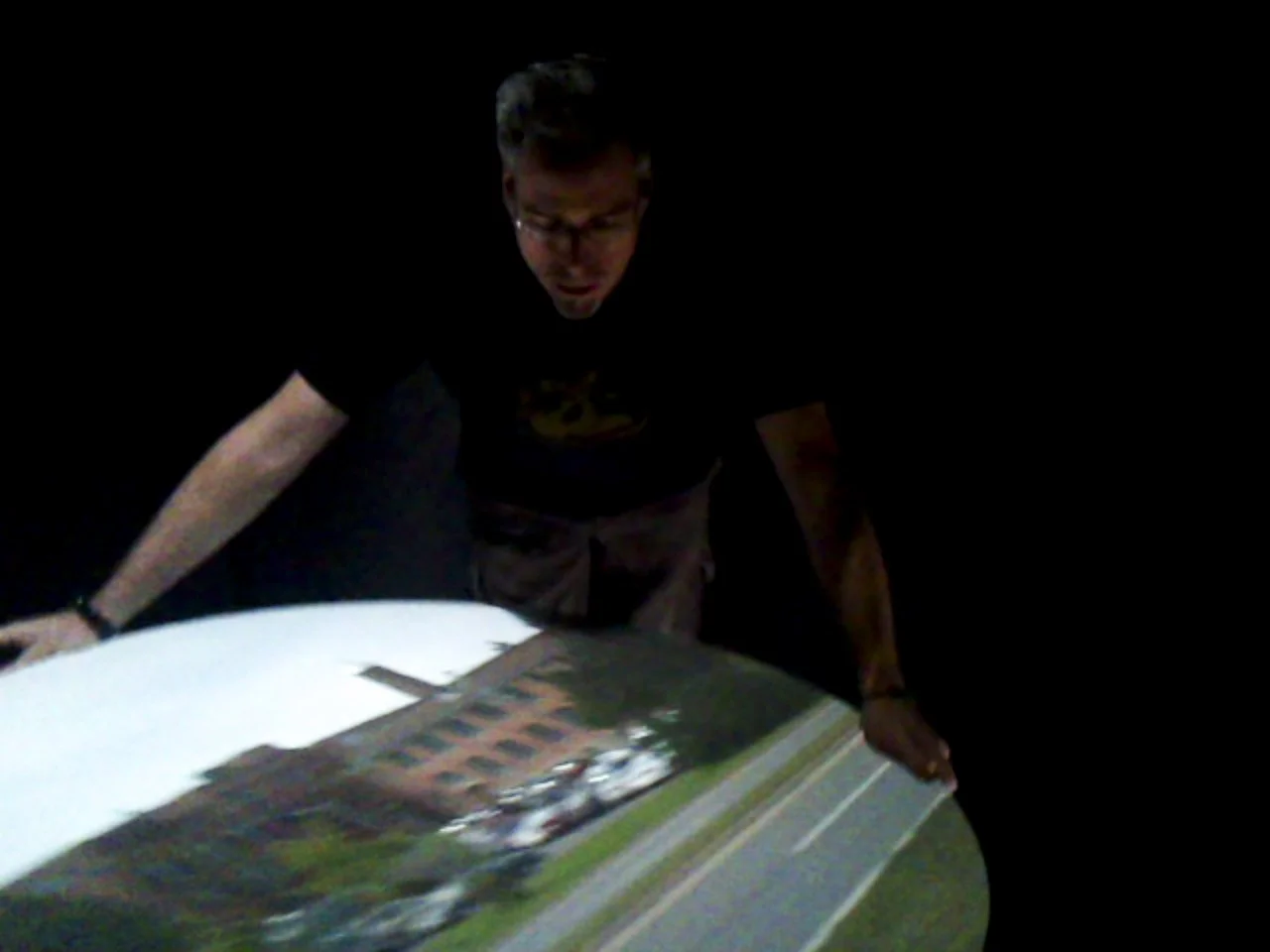
Viewing table, The Beaverbrook Art Gallery location, 2012

Vorti-Scope, The Tides Institute location, Eastport Maine, 2013

Viewing table, The Tides Institute location, Eastport Maine, 2013

Vorti-Scope, The Tides Institute location, Eastport Maine, 2013
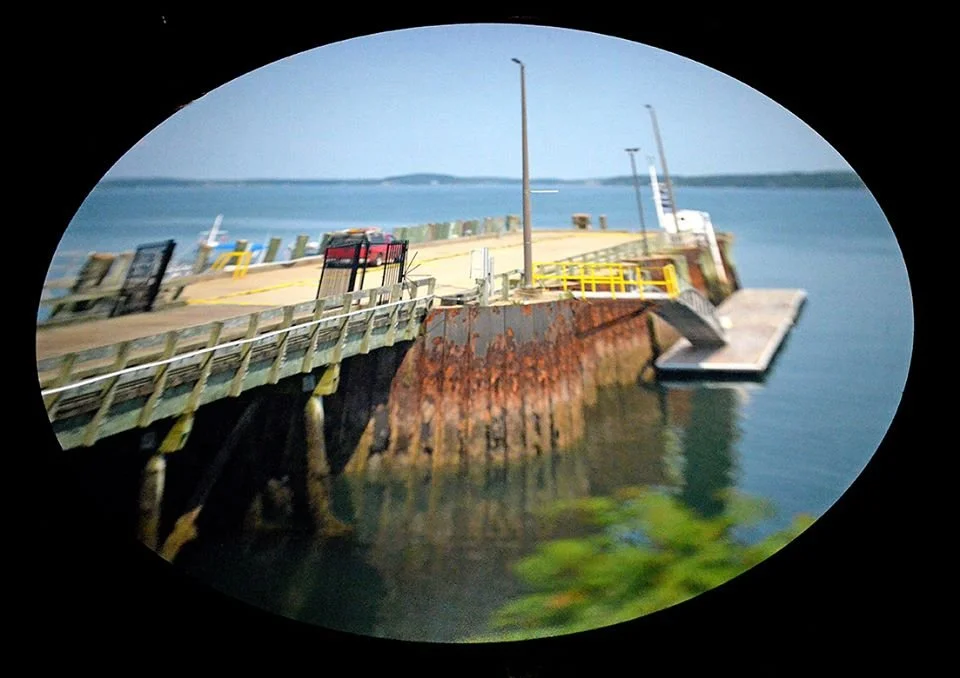
Viewing table, The Tides Institute location, Eastport Maine, 2013

Viewing table, The Tides Institute location, Eastport Maine, 2013

Vorti-Scope, The Tides Institute location, Eastport Maine, 2013
Artist Statement
This interactive sculptural camera obscura entitled Vorti-Scope is a community arts project created in partnership with The New Brunswick College of Craft and Design, edVentures and the Beaverbrook Art Gallery. Part Garden Folly - a kind of Jules Verne magical optical device, this camera obscura is designed to celebrate the picturesque Saint John River and the local community.
The magical phenomenon of light/image projections were first observed in the 5th century BCE when Chinese philosopher Mo-Ti witnessed an inverted image formed by light rays passing through a pinhole into a dark room. From that time, the dark room or “camera obscura” functioned as a portable box or tent drawing tool that eventually evolved into the photographic camera that we are familiar with today.
During the 19th century, due to the popularity of photographic processes, walk-in camera obscura buildings sprang-up and flourished at seaside resorts and areas of scenic beauty. Combining entertainment and education, these buildings were constructed using a mirror and lens technique, capable of projecting outside images onto an internal central table.
This interactive sculptural camera obscura located in downtown Fredericton, on the banks of the Saint John River, is informed by these 19th century models. Standing inside the space of the camera chamber the viewer becomes an “interiorized observer to an exterior world” focused upon the picturesque Saint John River. The ebb and flow of river and humanity are revealed in real-time views projected from a 360-degree rotating lens focused onto a central observation table.
The Vorti-Scope demonstrates in a playful, sensory and experiential way, a celebration of community and place, through the optical phenomenon that is at the root of contemporary photographic culture.